Biophysical Screening Services
Precision biophysics,
confident decisions
We use an extensive platform of biophysical techniques and capabilities to validate and characterise primary screening hits. Our expertise in NMR, SPR, ITC, MST, TSA and ASMS — applied across a wide range of drug discovery challenges — enables us to rapidly and accurately guide the evolution of initial hits through to candidates.
From binding data to design decisions
Our integrated biophysical screening services deliver the binding affinity, kinetics and thermodynamic data essential for confident hit validation and informed chemistry design decisions.
Hit Validation
Orthogonal biophysical techniques validate hits from all screening modalities and confirm mode and site of binding.
- NMR, SPR, ITC, MST, TSA and ASMS for orthogonal hit validation
- Identification of binding site (orthosteric, allosteric, cryptic) and stoichiometry
- Quantification of binding affinity (KD) and kinetics (kon, koff, kinact)
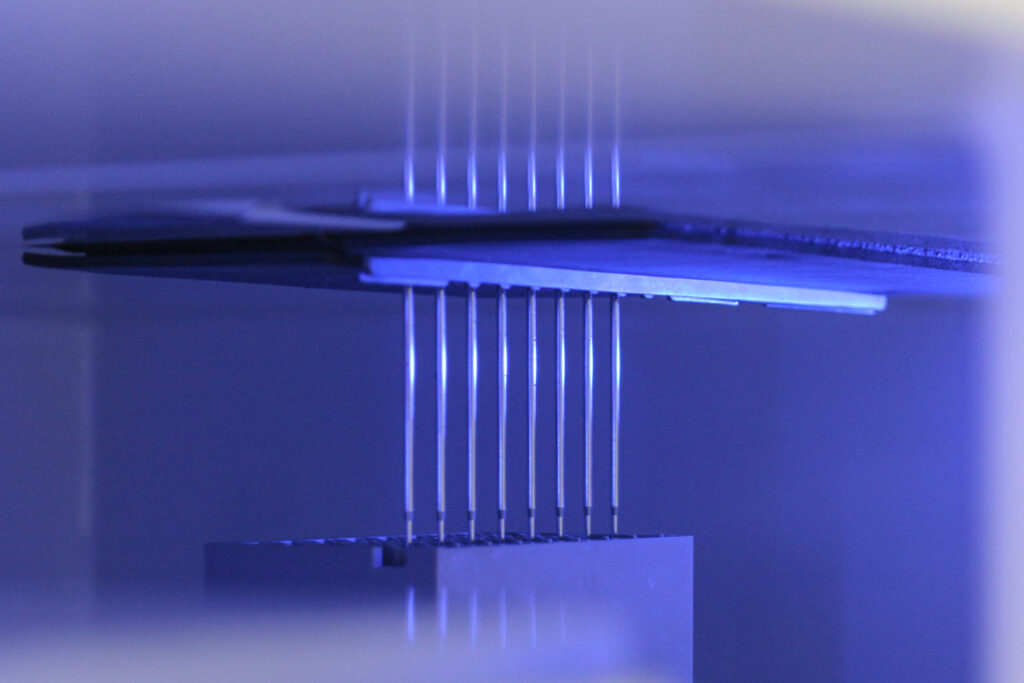
Surface Plasmon Resonance
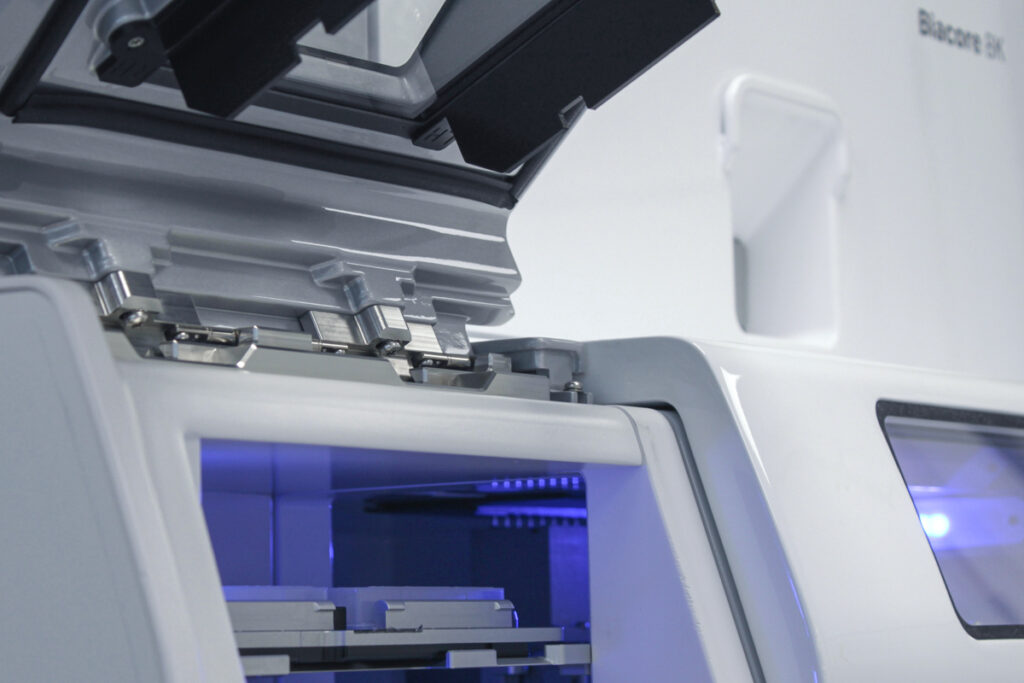
Biacore T200, 1S+ and 8K instruments deliver direct binding, affinity and kinetics measurements across a wide range of target and compound types.
- Direct binding, affinity and kinetics measurements
- Elaboration of fragment hits using off-rate libraries (ORL) and crude reaction mixtures (CRM)
- Ternary complex formation for PROTAC studies
- Characterisation of membrane proteins
ITC & Thermodynamics
ITC provides gold-standard thermodynamic characterisation of binding interactions, delivering full enthalpy, entropy and free energy profiles.
- Quantification of binding enthalpy (dH), entropy (dS), free energy (dG) and stoichiometry
- Automated PEAQ-ITC instrument for high-quality thermodynamic measurement
- Complementary to SPR for orthogonal affinity determination
Ligand-Observed NMR
Ligand-observed NMR provides rapid, material-efficient screening and characterisation of fragment binding to challenging targets.
- Fragment screening by 1H and 19F NMR: STD, water-LOGSY and relaxation filtered experiments
- Bound-state ligand conformation, epitope mapping and spy molecule competition
Integrated Drug Discovery
Turning discovery potential into clinical promise
Our biophysics platform provides the quantitative binding data that underpins every design decision — from initial hit validation through to lead optimisation, using orthogonal techniques to build confidence at every stage.
Biology Foundations
Structure & Hit ID
DEL Services
Chemistry & Data
Preclinical Readiness
Why work with us
Robust binding data at every decision point
Our biophysics team works hand-in-hand with structural biology, chemistry and hit ID to ensure that every compound progressed is backed by robust, orthogonal binding data. Quantitative affinity and kinetic data from our platform is invaluable in the decision-making process — guiding chemistry design and ensuring only the most promising compounds move forward.
Meet the Biophysics team:
-

Zoe Daniels
Senior Team Leader, DMPK, SPR and ITC
Zoe Daniels
Senior Team Leader, DMPK, SPR and ITC
Zoe Daniels joined Vernalis in 2005 through the company’s acquisition of Ionix Pharmaceuticals. Prior to that she spent several years at GSK working in ion channel drug discovery. During her time at Vernalis she has worked in several teams including assay technology, DMPK and currently SPR, gaining a wide range of technical skills in these areas. She has also been a project manager for one of the Bcl-2 family targets, working alongside our Servier collaborators and currently manages a team of DMPK, SPR, ITC and cell culture specialists.
Biophysics Case Studies
Explore how our biophysics expertise has provided the binding data and structural insights needed to progress fragment hits through to optimised lead series.
-
DYRK1A and DYRK1B selective inhibitors
A Vernalis and Servier NMR fragment screen delivered two series of potent, selective DYRK1A inhibitors, including the brain-penetrant tool compound 34.
Outcome Two optimised inhibitor series and a selective, brain-penetrant tool compound. -
PDHK — application of off-rate screening
SPR off-rate screening of unpurified reaction products drove rapid hit-to-lead progression to selective, sub-100 nM pan-isoform PDHK inhibitors.
Outcome Proprietary off-rate screening validated on a live programme, delivering sub-100 nM leads.
Validate your compound series with confidence
We’d love to hear from you! Head to our contact page to get started.