PAC-FragmentDEL
Fragments redefined,
limitations removed
In collaboration with HitGen, we have developed PAC-FragmentDEL — a new approach to fragment screening that exploits DNA-encoded methods to overcome the limitations of conventional biophysical screens. By requiring only small amounts of protein and operating at low concentrations, PAC-FragmentDEL opens fragment screening to targets previously inaccessible by conventional approaches.
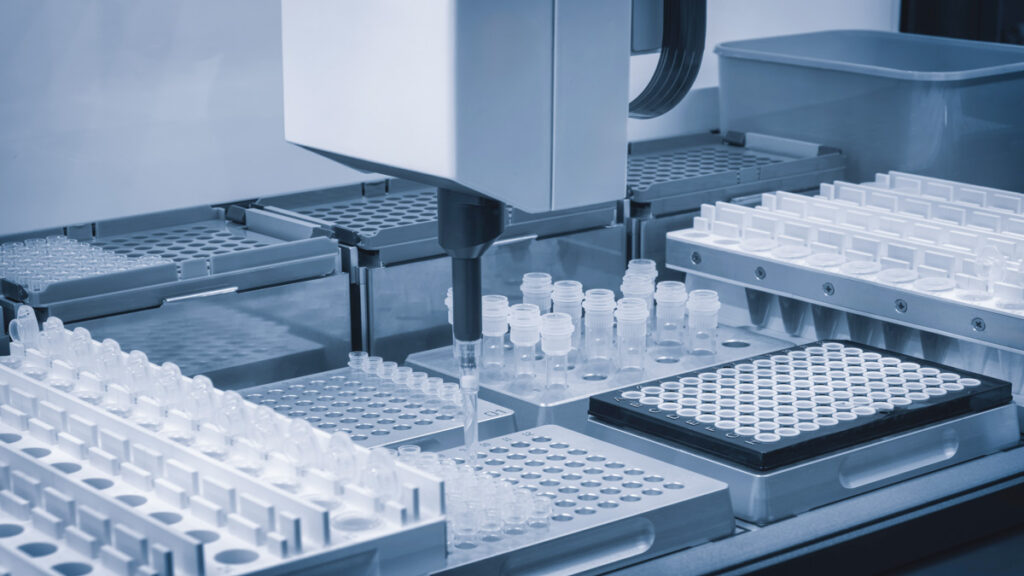
Fragment screening, reimagined
The PAC-FragmentDEL platform combines the sensitivity of DNA-encoding with the pharmacological relevance of fragment screening to deliver validated hits for any target.
The PAC-FragmentDEL Approach
Photoactivated covalent capture combined with DNA-encoding delivers a fragment screen that is rapid, sensitive, and requires only small amounts of target protein.
- UV photoactivation covalently captures fragments bound to the protein target
- DNA-encoding enables hit identification by PCR and Next Generation Sequencing
- Identify low molecular weight start points with minimal protein requirement
Library Design
The PAC-FragmentDEL library is designed to maximise coverage of fragment chemical space, with each member linked to a photoactivatable group and a unique DNA tag.
- Fragment headgroups linked to a photoactivatable diazirine group
- DNA tag solubilises fragments, overcoming conventional solubility constraints
- Type 1 (extension linker) and Type 2 (merged fragments) library designs
Screening Workflow
The PAC-FragmentDEL screen is a controlled, stepwise process from protein incubation through photoactivation and washing to NGS-based hit identification.
- Target protein incubated with library, followed by UV photocrosslinking of bound fragments to the protein
- Protein immobilisation, wash cycles, PCR and NGS for sensitive hit identification
- Comparative samples confirm specificity and remove background signal
Hit Validation
Validated PAC-FragmentDEL hits are synthesised off-DNA and binding confirmed by orthogonal biophysical methods, then elaborated to explore chemical space.
- Off-DNA synthesis and validation by SPR, ligand-observed NMR and X-ray crystallography
- Linker vector provides orientation information for rational fragment elaboration
- Rapid exploration of chemical space from validated PAC-FragmentDEL starting points
Integrated Drug Discovery
Turning discovery potential into clinical promise
PAC-FragmentDEL combines the sensitivity of DNA-encoding with photoactivated covalent capture — overcoming the protein, solubility and throughput limitations that constrain conventional fragment screening.
Biology Foundations
Structure & Hit ID
DEL Services
Chemistry & Data
Preclinical Readiness
Why work with us
Fragment screening without the limitations
PAC-FragmentDEL was developed by Vernalis and HitGen specifically to address the limitations that prevent conventional fragment screens from working for many targets. With minimal protein requirement, no solubility constraints and the sensitivity of DNA-encoding, PAC-DEL delivers validated fragment hits where other methods cannot.
Meet the PAC-FragmentDEL team:
-

Andy Massey PhD
Head of Oncology and Cell Biology
Andy Massey PhD
Head of Oncology and Cell Biology
Dr Andy Massey is currently Head of Oncology and Cell Biology having joined Vernalis in 2002 after completing his PhD and post-doc with Cancer Research UK. His group focuses on the development and application of cellular assays to support and progress compounds from target validation to hit ID, and then through lead optimisation and into early pre-clinical development. He also has responsibility for managing the DEL screening activities at the Cambridge site. Additionally, he has co-led several drug discovery programs both internally (Hsp90 and Chk1) and for external collaborators leading to several clinical and preclinical candidates. He has authored over forty peer reviewed scientific publications.
Open up novel chemical space
We’d love to hear from you! Head to our contact page to get started.