Vernalis joins the LIGAND-AI Consortium
Vernalis will play a key role as IHI Project LIGAND-AI Launches to Advance Artificial Intelligence (AI)-Driven Drug Discovery through Open Science
PRESS RELEASE Frankfurt, Germany 20th January 2026
The new multi-sector public-private partnership funded by the Innovative Health Initiative (IHI) brings together 18 partners across nine countries to generate large open, high-quality datasets of protein–ligand interactions and use them to train artificial intelligence (AI) models capable of predicting candidate molecules as suitable binders for thousands of human proteins.
- Experts across academia, industry, technology companies, and research organizations will collaborate over the next five years to generate open and accessible, high-quality, AI-ready protein-ligand data at scale as a public resource.
- With a budget of more than €60 million, the project aligns with IHI’s mission to foster international, cross-sectoral collaboration and advance medicine discovery by bringing the power of data science to hit identification technologies.
Led by Pfizer and the Structural Genomics Consortium (SGC), LIGAND-AI consortium will interrogate thousands of proteins relevant to existing and unmet disease areas including rare, neurological, and oncological conditions.
Early drug discovery is a long, expensive, and uncertain process. Scientists spend years testing thousands of molecules to find just one that binds to a disease-related protein. LIGAND-AI aims to change this by combining advanced laboratory technologies with computational methods to create a seamless pipeline from experiment to prediction. The consortium will generate billions of data points using complementary screening technologies, enabling researchers worldwide to develop, train and benchmark AI models that predict molecular interactions.
“This project brings together scientists and companies from across disciplines within an open science ecosystem. It is heartening to see these diverse scientific communities coalesce around a common vision to generate and share valuable chemical data openly with the world,” said Aled Edwards, CEO of the Structural Genomics Consortium and project coordinator.
Beyond data generation, LIGAND-AI will foster an open discovery ecosystem by inviting the scientific community to co-develop and refine predictive models through open challenges and benchmarking campaigns. All data generated through LIGAND-AI will be shared according to FAIR principles, ensuring they are findable, accessible, interoperable, and reusable by the global scientific community. By integrating expertise in protein science, structural biology, chemistry, and machine learning, the project will build a dynamic network where experimental and computational discoveries evolve together, ensuring that progress is cumulative, transparent, and accessible.
By establishing a shared, open-science infrastructure for AI-driven drug discovery, LIGAND-AI will not only advance early-stage research but also train a new generation of interdisciplinary scientists fluent in both computation and experimentation. The project represents a major step toward the mission of Target 2035—to discover chemical modulators for every human protein by the year 2035. LIGAND-AI is a major milestone toward realizing this vision, catalyzing global collaboration, reducing fragmentation across sectors, and advancing data-driven discovery.
For more information, visit www.target2035.net
Contact:
Structural Genomics Consortium
Sofia Melliou, Research Communications Specialist
sofia.melliou@thesgc.org
About LIGAND-AI:
LIGAND-AI is a flagship project of the Target 2035 initiative, funded by the Innovative Health Initiative, a public-private partnership (PPP) between the European Union and the European life science industries, represented by COCIR, EFPIA (including Vaccines Europe), EuropaBio and MedTech Europe.
The LIGAND-AI Consortium is formed by the following partners:
Structural Genomics Consortium, European Molecular Biology Laboratory, Goethe University Frankfurt, Universidade Estadual de Campinas, University College London, University Health Network, Vall d’Hebron Institute of Oncology (VHIO), Abcam Limited, AstraZeneca UK Limited, Chemspace LLC, Enamine Germany GmbH, IBM Research Israel – Science and Technology LTD, Novo Nordisk, Nuvisan ICB GmbH, Pfizer Inc, The Hospital for Sick Children in Toronto, Thermo Fisher Scientific GmbH, and Vernalis (R&D) Limited.
Latest News
Upcoming Events
 9th – 11th November 2026
Cologne, Germany
Bio Europe 2026
Attendees:
 Ben Davis PhD
Research Fellow and Director of Business Development
Ben Davis PhD
Research Fellow and Director of Business Development
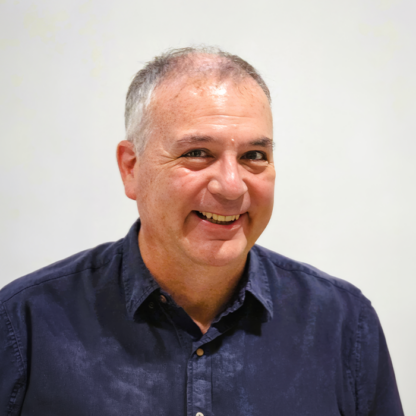
Dr Ben Davis is an NMR spectroscopist and biophysicist by training, although since 2022 he has focussed on Business Development. However, he still maintains an active interest in developing new methods to enable Fragment Based Drug Discovery, particularly against challenging targets. Ben studied for his PhD in protein folding with Professor Alan Fersht at Cambridge University, and then studied molecular interactions at UCL before joining RiboTargets, now Vernalis, in 1998. He has contributed to seven books on FBDD since 2012, and has been an author on more than thirty scientific publications. He is a frequent speaker at scientific conferences.
 Kerry Waters MBA
Commercial Director
Kerry Waters MBA
Commercial Director
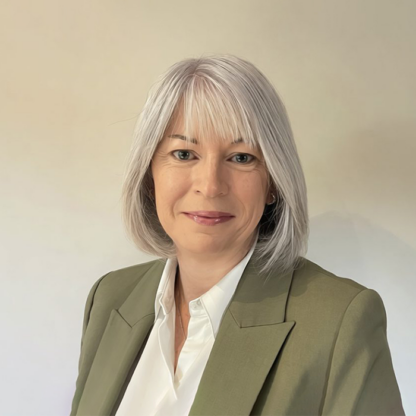
Kerry brings nearly 30 years of drug discovery experience across government, pharmaceutical (MSD and GlaxoSmithKline) and contract research industries (Transpharmation Ltd, Sygnature Discovery Ltd), including 8 years in business development. During this time, Kerry has successfully driven sales growth globally across standalone services and fully integrated drug discovery programmes amounting to £millions per year and fostered key strategic partnerships with biotechs and VCs. Kerry completed her Master’s in Business Administration with the Open University in 2021.