Cell Biology Services
Concept to candidate
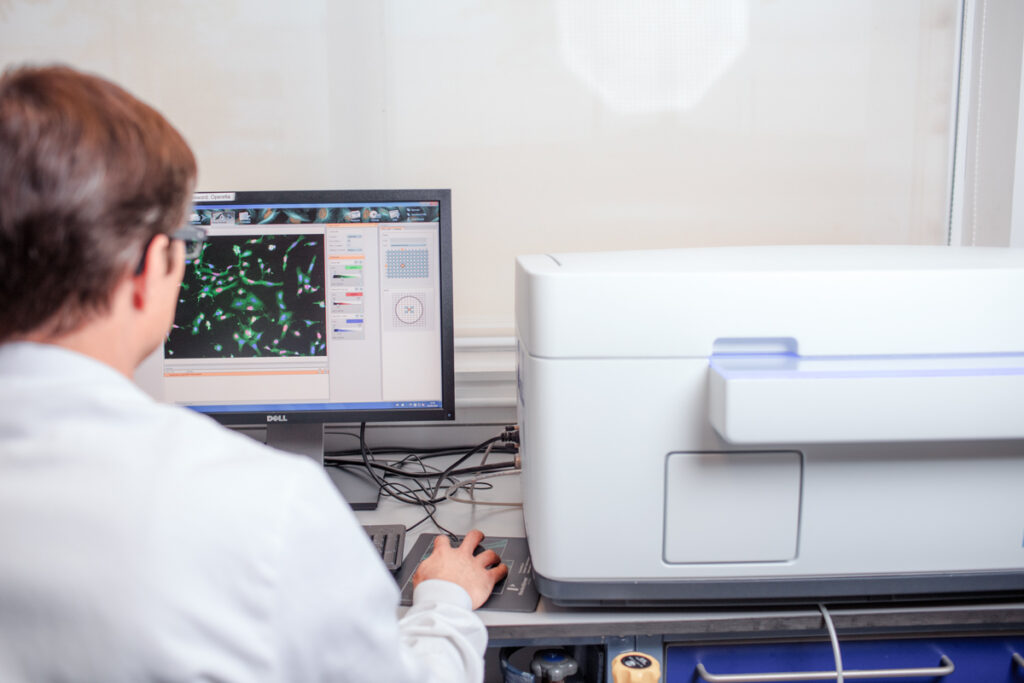
Demonstrating the cellular activity of novel small molecule inhibitors and that their pharmacology is consistent with the expected target inhibition is critical to progressing novel therapeutics. Key techniques include high content imaging, flow cytometry, cell-based reporter assays, ELISA, high throughput western blot, in-cell target engagement, RNAseq and cell growth/cytotoxicity.
From cells to clinical relevance
Our cell biology services bridge in vitro and in vivo, providing the mechanistic and pharmacological evidence needed to progress novel compounds with confidence.
Cell-Based Assays
A comprehensive suite of cell-based assays to characterise target engagement, compound activity, and mechanism of action in relevant cellular models.
- 2D and 3D cell models for compound screening and target engagement
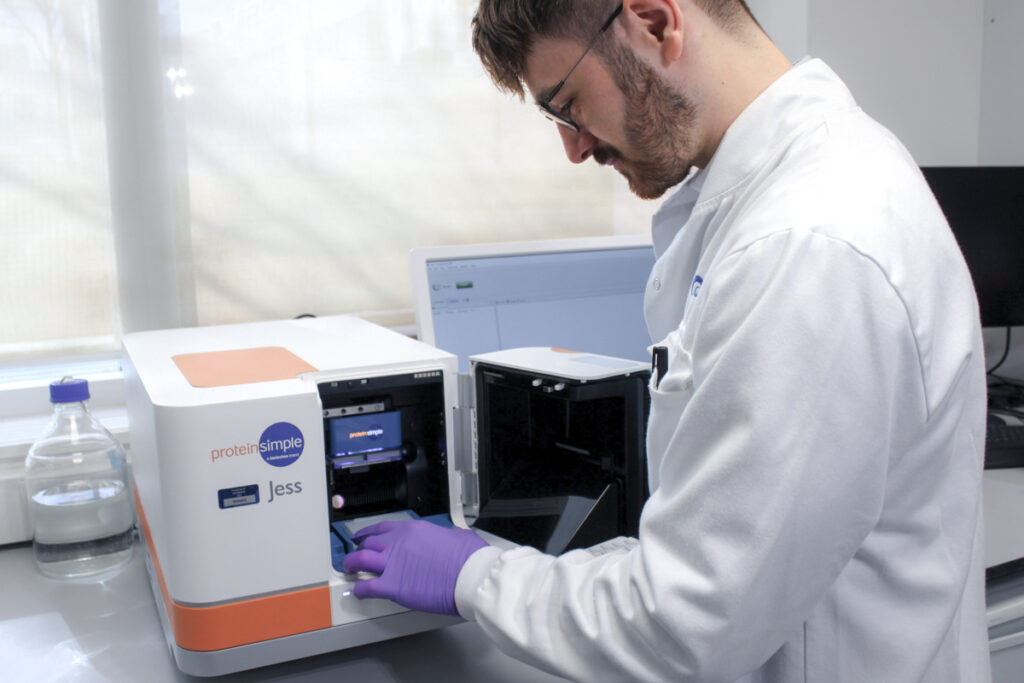
- High content imaging, flow cytometry and high-throughput western blot (Jess)
- Biomarker development and cytotoxicity assessment
Target Identification
End-to-end target biology support from identification and validation of drug targets through to functional characterisation in disease-relevant cellular systems.
- Target identification, validation and functional enablement
- Cell-based target engagement assay development
- RNAseq for gene expression profiling and mechanistic studies
In Vivo Translation
Our cell biology team designs and manages in vivo studies through external providers, with full pharmacokinetic and pharmacodynamic analysis analysis to support progression decisions.
- In vivo study management and pharmacokinetic and pharmacodynamic analysis analysis
- In vitro-in vivo translation studies for confident progression
- Extensive oncology experience from hit ID to early pre-clinical development
Anti-Infectives
Class 2 containment laboratory capabilities enable evaluation of compounds against bacterial pathogens, supporting anti-infective drug discovery programmes.
- Class 2 containment laboratory
- Minimum inhibitory concentration (MIC) evaluation for gram +ve and -ve organisms
- Time to kill assessment and combination studies
Integrated Drug Discovery
Turning discovery potential into clinical promise
Our cell biology team provides the cellular validation that connects molecular potency with pharmacological relevance — bridging the gap between target engagement and translational in vivo evidence.
Biology Foundations
Structure & Hit ID
DEL Services
Chemistry & Data
Preclinical Readiness
Why work with us
Connecting molecular science with cellular pharmacology
Our cell biology team provides the biological validation that connects molecular activity with cellular pharmacology and translational relevance. With extensive oncology experience and a class 2 containment facility for anti-infective work, we support projects from concept through to the mechanistic and in vivo evidence needed for progression.
Meet the Cell Biology team:
-

Andy Massey PhD
Head of Oncology and Cell Biology
Andy Massey PhD
Head of Oncology and Cell Biology
Dr Andy Massey is currently Head of Oncology and Cell Biology having joined Vernalis in 2002 after completing his PhD and post-doc with Cancer Research UK. His group focuses on the development and application of cellular assays to support and progress compounds from target validation to hit ID, and then through lead optimisation and into early pre-clinical development. He also has responsibility for managing the DEL screening activities at the Cambridge site. Additionally, he has co-led several drug discovery programs both internally (Hsp90 and Chk1) and for external collaborators leading to several clinical and preclinical candidates. He has authored over forty peer reviewed scientific publications.
Cell Biology Case Studies
Explore how our cell biology capabilities have provided the pharmacological evidence needed to progress novel small molecule inhibitors towards pre-clinical development.
-
Hsp90 oral backup pre-clinical candidate
Fragment-based and in silico hits were combined into a novel series of Hsp90 inhibitors, delivering tumour growth regression on oral dosing in a BT474 xenograft model.
Outcome Oral pre-clinical candidate — the follow-on to the intravenous phase II compound. -
Non-hydroxamate LpxC inhibitors
A Vernalis and Taisho collaboration used fragment and structure-based methods to deliver a non-hydroxamate LpxC inhibitor with antibacterial activity against P. aeruginosa.
Outcome Antibacterial lead that designs out the hydroxamate zinc-binding group and its selectivity risk.
Take your cellular studies further
We’d love to hear from you! Head to our contact page to get started.